

Counseling helps many students thrive. Is CT meeting the need on community college campuses?
Connecticut Public Radio by Michayla Savitt, October 2026
On the Tunxis campus of Connecticut State Community College, a sign in front of a building reads, “Keep going. You’ve got this!”
Inside, some students quietly pore over books.
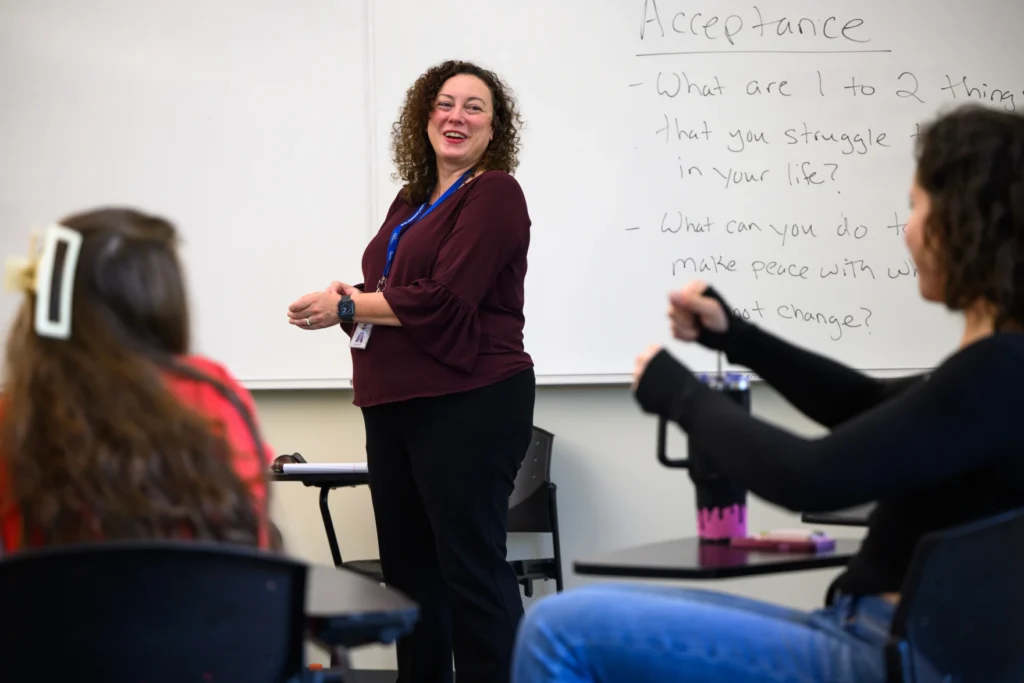
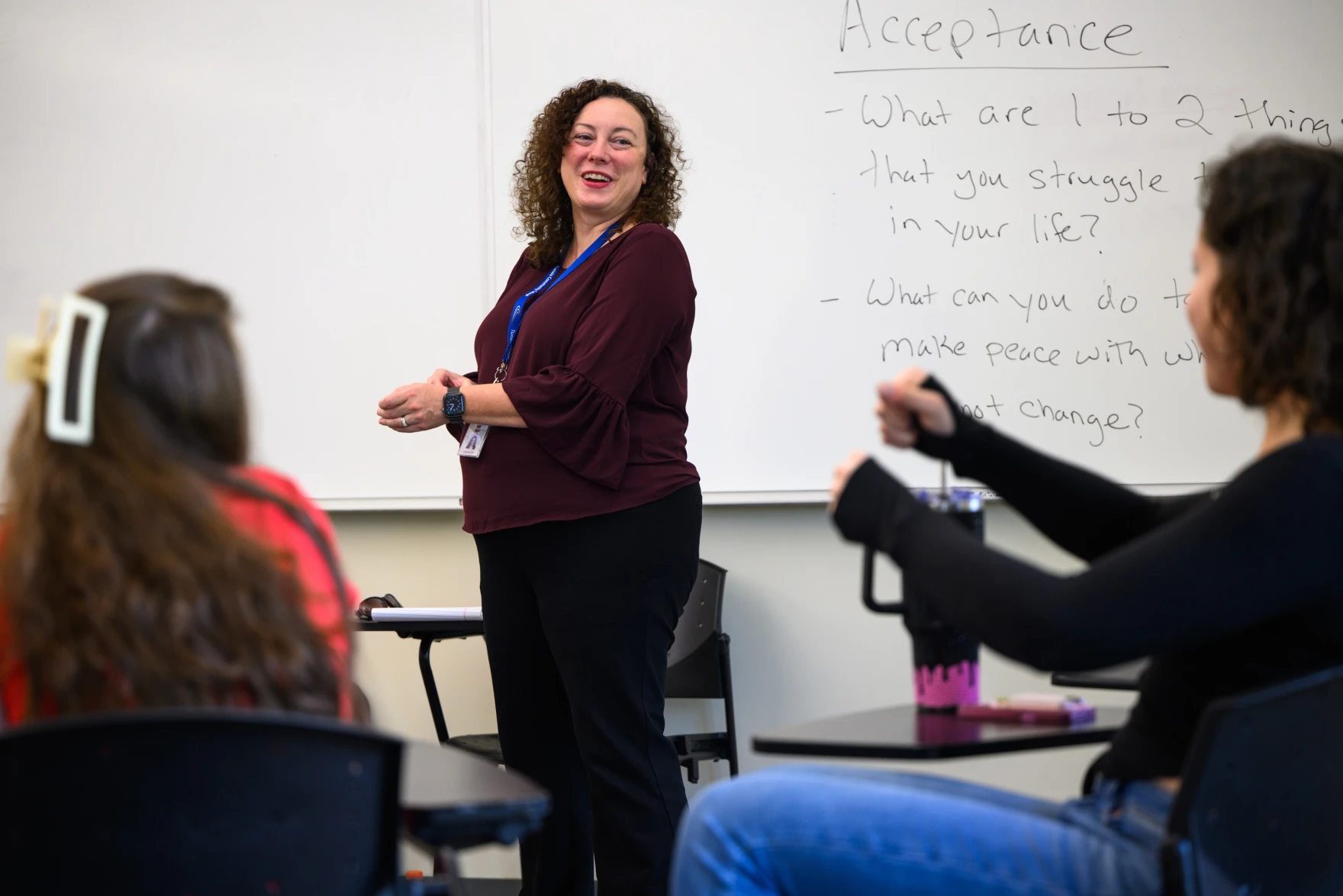
But in a more boisterous corner, with big windows facing some red-leaved trees, the Healthy Minds Club gathers in a classroom for its regular meeting. Faculty advisor Kelly O’Brien Mann talks to the group about the importance of setting goals in order to have a sense of purpose.
“If you don’t know what is it you’re working for, what’s meaningful to you, what does your life look like in the future?” she asks.
The club’s goal is to normalize talking about mental health. It’s a support group of sorts, where students share what they’re going through.
O’Brien Mann is a professor of psychology — but she wears more hats than that.
“In any given day, we might be doing counseling on the fly, and social work, and case management, and de-escalating, and helping students just problem solve with really complicated life issues,” she said.
Across the country, studies show many students struggle with mental health. In a recent survey by the Healthy Minds Network, an organization that conducts research to help guide campus policies, about one third of U.S. college students reported symptoms of moderate or severe anxiety, and roughly the same share reported symptoms of moderate or severe depression.
At Tunxis, there are usually two wellness counselors on staff to provide mental health services. O’Brien Mann would like to see more counselors there, including a nurse practitioner for medication management.
Read more at Connecticut Public Radio.