


Pushing Physicians to the Brink
Chicago Health Magazine by Katie Scarlett Brandt, October 2026
Burnout and a strained healthcare system are forcing medicine to confront how it cares for its own
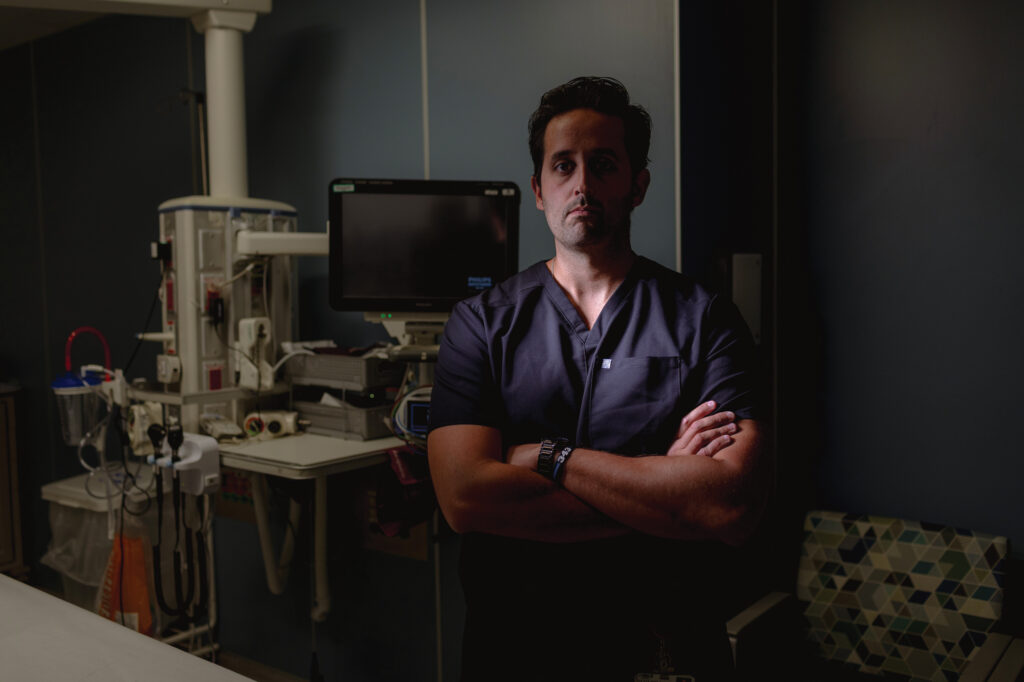
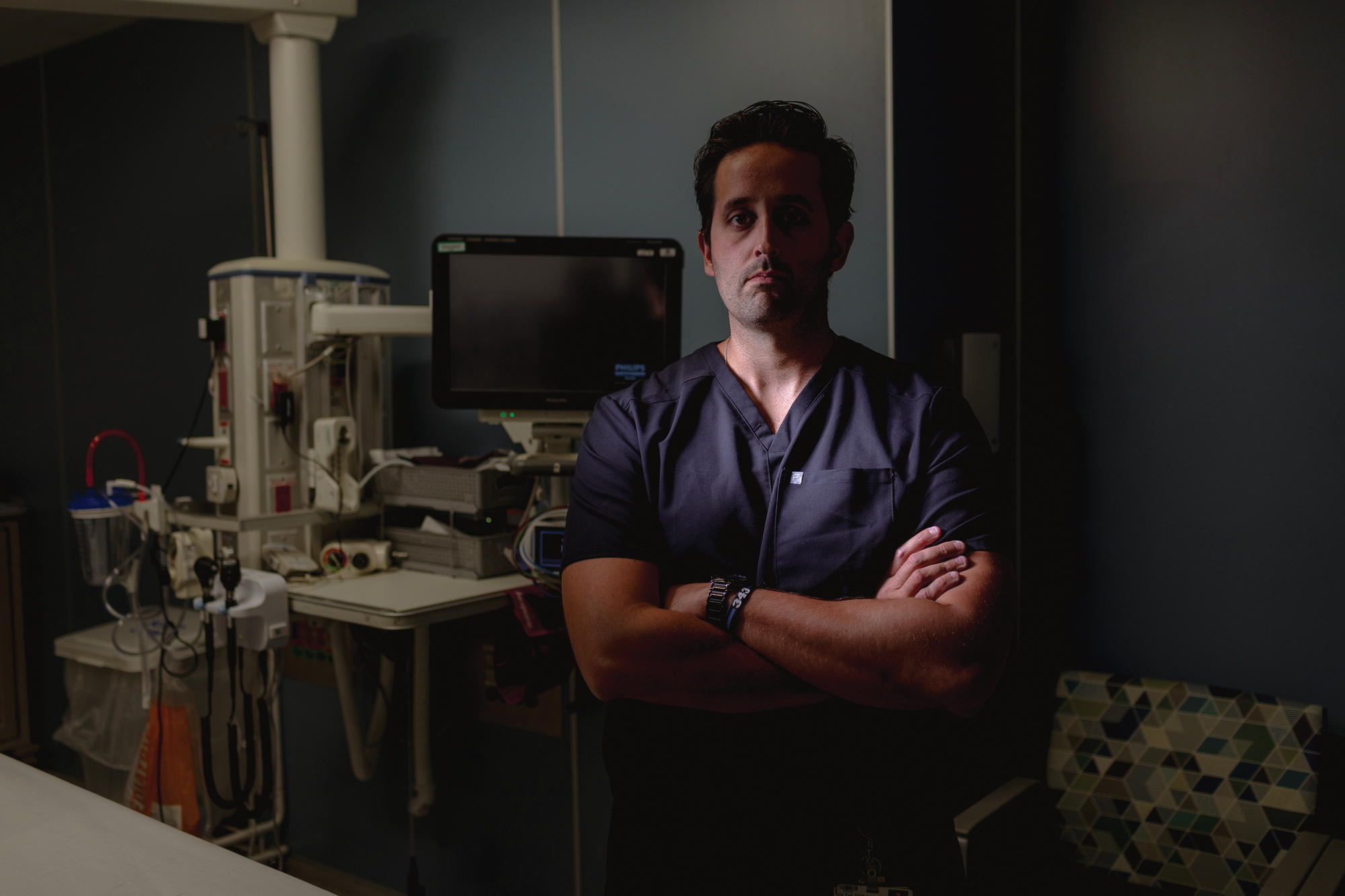
Emergency medicine physician Nicholas Cozzi, MD, won’t say “the q-word” as he walks through an empty section of Rush University Medical Center’s emergency department. The ER this morning is what nobody on staff likes to say, for fear of jinxing themselves: quiet.
But not for long. Cozzi mentally prepares for the surge that will start around 11 a.m. and last 18 hours. Four physicians will manage 65 patient rooms, while another 30 to 60 patients fill the waiting area. Some who make it out of the waiting area but remain without a dedicated room will sit in chairs lining the hallway. They’ll grab at Cozzi as he walks past, asking for help.
“People talk about how the system is breaking, but it’s not,” Cozzi says. “It’s broken. And in the emergency department, we’re seeing the collapse of the system all around us.”
Cozzi isn’t talking about Rush specifically. Emergency departments across Chicago and the country are overwhelmed. They’re crowded with patients who have put off care due to a swell of overlapping issues: lack of insurance, lack of a primary care provider, and fears around immigration enforcement. They put off medical attention until manageable issues become catastrophic. In two studies from 2022, Yale researchers detail widespread emergency department crowding nationwide that jeopardizes patient safety.
Emergency medicine physicians — who have among the highest burnout rates of any specialty, according to the American Medical Association — are caught between helping patients and navigating an overburdened healthcare system.
“The emergency department is an incredibly stressful environment. Part of that is intrinsic,” says Stefanie Simmons, MD, an emergency medicine physician and chief medical officer of the health worker advocacy nonprofit Dr. Lorna Breen Foundation. “But you’re also bearing the brunt of all of the failures of the healthcare system — the failures of access, treatment, follow-up. You’re doing your best to try to keep a boat afloat with chewing gum and sealing wax.”
Justin Fiala, MD, a pulmonary, sleep, and critical care physician in Chicago, says, “So many of us feel very deeply about doing no harm, but the system at every turn seems to want to do harm.”
Read more at Chicago Health.