



A growing tool to help CT Latinas with postpartum mental health: Spanish-speaking doulas
Connecticut Public Radio by Sujata Srinivasan, September 23, 2026
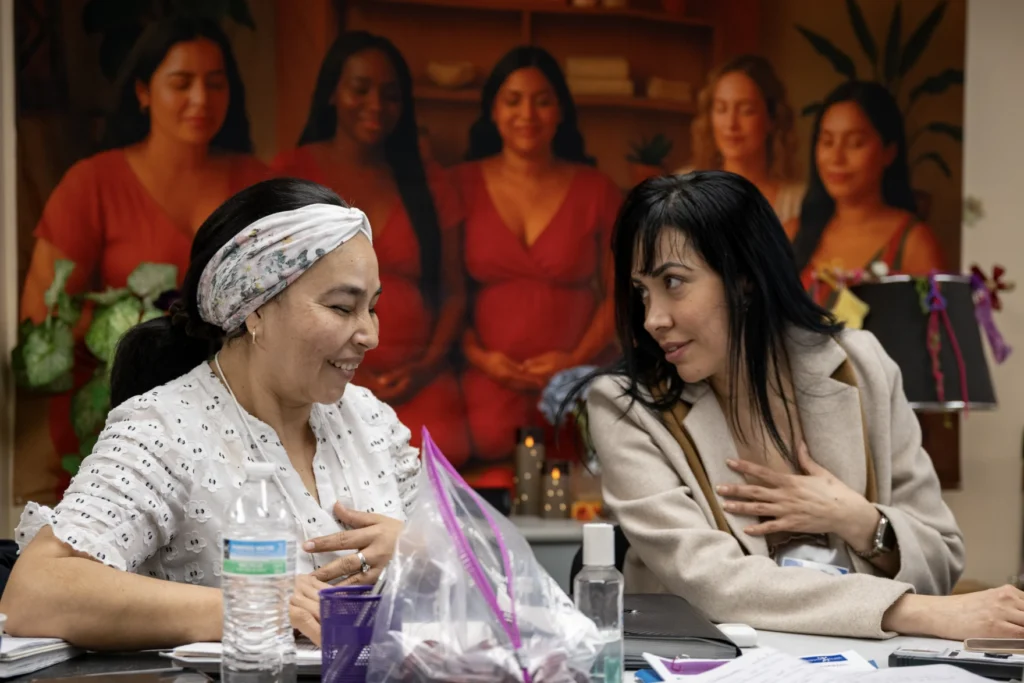
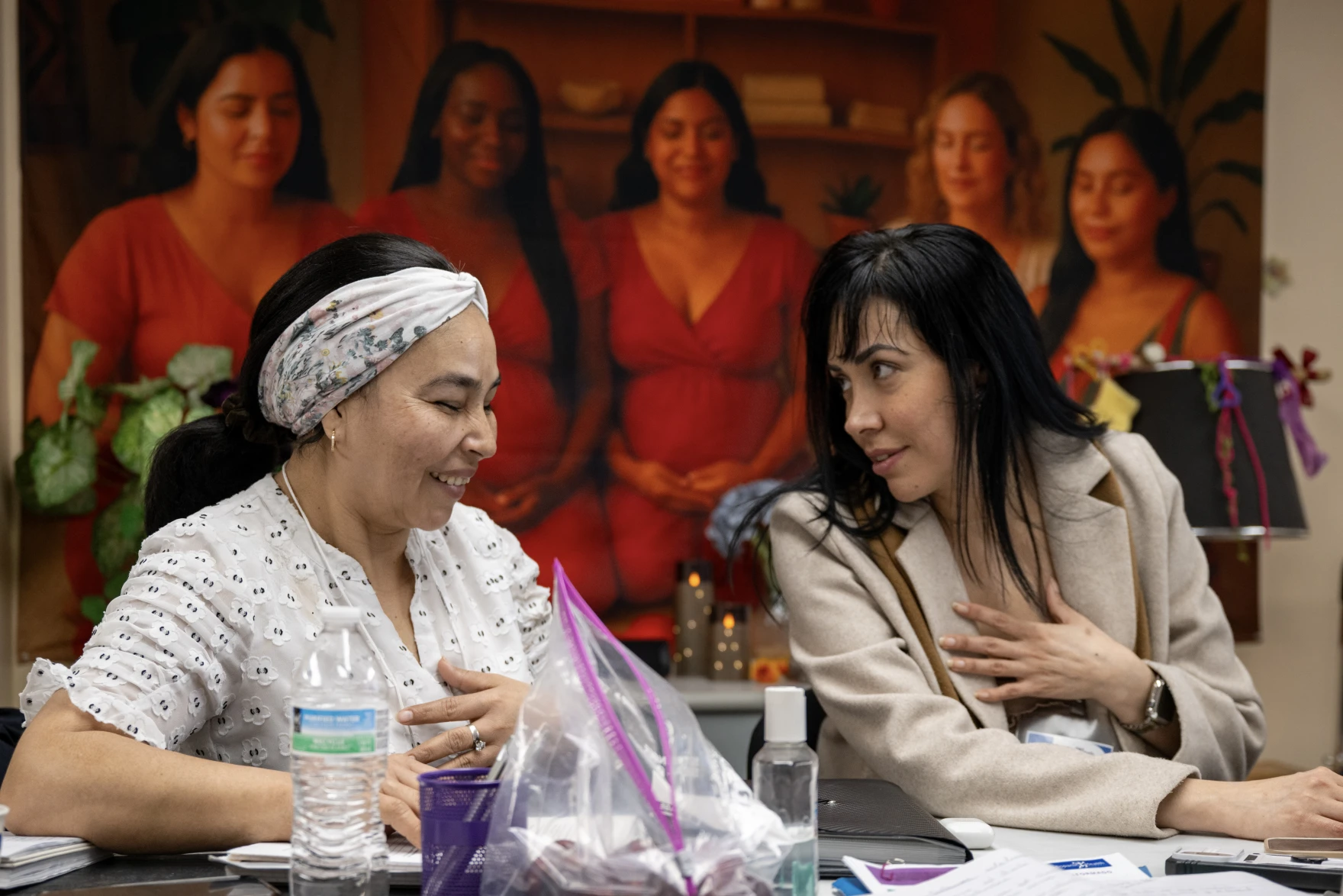
On a sunny Tuesday morning at the Hispanic Health Council in Hartford, seven Spanish-speaking doulas-in-training were gathered around a table taking notes. They were responding to what they said was a calling to help Hispanic mothers with childbirth, and to support new moms through every part of becoming a parent.
“Latina women, we don’t ask for support,” said Myra Vasquez, one of the trainees. “We don’t ask for help.”
To make it easier for Latinas to get help, the Hispanic Health Council, in collaboration with Hartford Hospital, launched its Spanish-speaking doula program last year. The effort to bridge access gaps comes after Connecticut Medicaid began reimbursing doulas for their work.
And it’s part of a growing effort in Connecticut and across the country to better serve Latinas, who often face a variety of struggles as they access healthcare, from language barriers to cultural differences.
Doulas are caregivers who help clients navigate the healthcare system before, during and after childbirth. That kind of assistance can make a significant difference for Hispanic and Latina mothers in Connecticut and beyond, as data shows many face greater barriers accessing care. Compared to white women, Hispanic mothers are more likely to have births for which they received late or no prenatal care.
For Vasquez, this work is personal. She was inspired by the strength of her mom and grandmother, she said, and she aspired to honor that strength in other women.
“To give back to these women, especially people like my mom, my grandmother, and see that in all of my clients,” said Vasquez.
Read more at Connecticut Public Radio.